
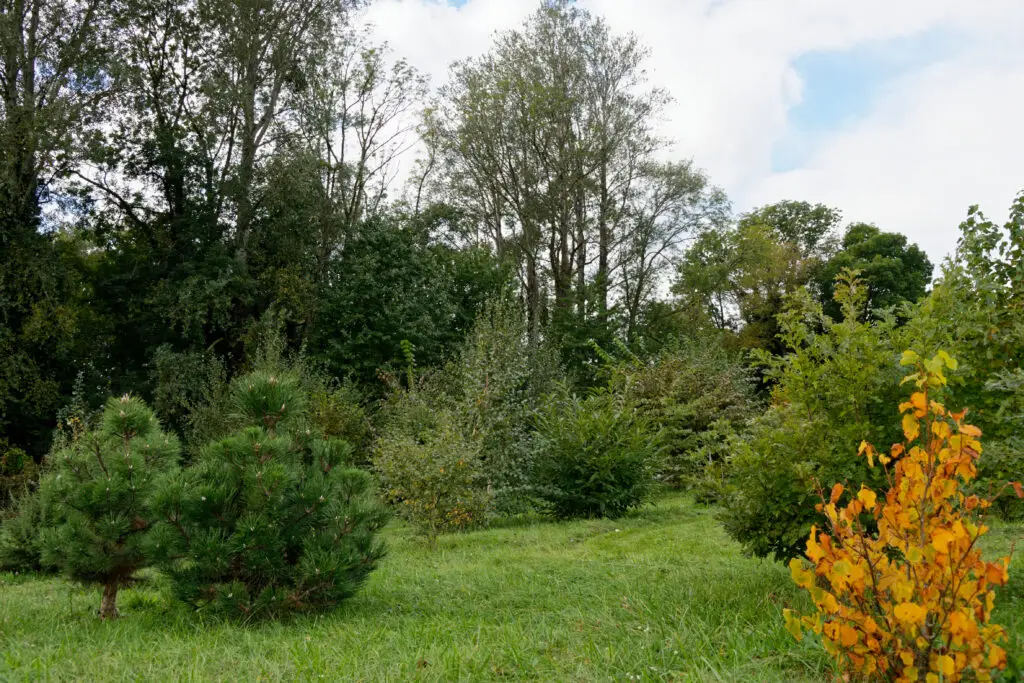
Replanting a truffle farm is like rekindling a precious fire: a gesture for the future to maintain the productivity of your truffle trees. Whether it’s black truffles, Burgundian truffles, summer truffles, or even Alba truffles, there are several techniques available to strengthen the presence of spores in the soil and thus encourage the formation of new truffles. Here is an overview of the methods most used today by experienced truffle growers.
Why repopulate with spores?
Each gram of fresh truffle contains nearly 4 million spores. By replanting them closer to the roots of your trees, you increase the potential for mycorrhization and stimulate production. Replanting can thus revive a dormant truffle farm, strengthen a producing truffle farm, or help young plants get off to a good start.
Three types of spores, three methods of preparation
1. Frozen spores
Relax 50 g dissolve the spores and mix them very finely with a little water to obtain a homogeneous preparation. Then add:
- 2 bags (3 L) special truffle substrate
- Then 2 bags of Terra-Truffe dynamization
This mixture allows to obtain approximately 40 truffle traps, or 10 trees with 4 traps each.
Conservation: up to 2 years in the freezer.
2. Ready-to-use spores (Spomela or ready-made traps)
Simply mix:
- 2 bags of 1 L of spores
- With 1/2 bag de Terra-Truffe dynamization
Ideal for 2 to 3 trees, With a total of 10 traps.
Conservation: 6 months in the refrigerator.
3. Dehydrated spores
Rehydrate:
- 25 g dehydrated inoculum in 20 cl of water
Let it rest for 1 hour, then mix with: - 1 bag from a substrate (3 L)
- 1 bag de Terra-Truffe dynamization
This mixture is enough for about 20 truffle traps (that is, 5 trees).
Advantage: preservation over several years, a more «natural» method.
The application techniques
1. Individual truffle traps
Dig 4 holes around each tree, at a distance varying according to the age of the tree (30 cm to 50 cm from the trunk). Each hole should be 25 cm in diameter, 20 to 25 cm deep. Fill one-third of the hole with the mixture, then cover with the extracted soil. Water if necessary.
- First year to the four cardinal points
- 2nd year : shift by 1/4 of a turn
- 3rd year : move a little further away from the trunk
2. Cross-shaped slopes
Draw two 15 cm deep grooves in a cross direction from the trunk to the edge of the burned area. Fill the bottom with the mixture, cover it, then water it.
3. Crown-shaped saddle
Dig a circular furrow around the tree, inside the burned area. Fill it up, cover it up, and water it. Alternative: Just make a circle arc.
4. For young plants (1 to 2 years old)
Sprinkle the mixture around the plant, then gently incorporate it into the soil using a hoe or a bio-fork (at a depth of 10 to 15 cm). Repeat every year between late winter and early spring.
When to replant?
The right time to replant a truffle farm is when between the end of the harvests (February) and the beginning of the formation of the new truffle producers (May). With young plants, the schedule is more flexible.
In the event of drought or late application, good watering is essential, and it is advisable to mowing the treated areas to retain moisture.
What equipment should I bring?
- Shaft or chisel to dig the traps
- Bucket for mixing substrates
- Sprinkler or irrigation hose
- Bio-fork for young plants
- Mulch protection if necessary